
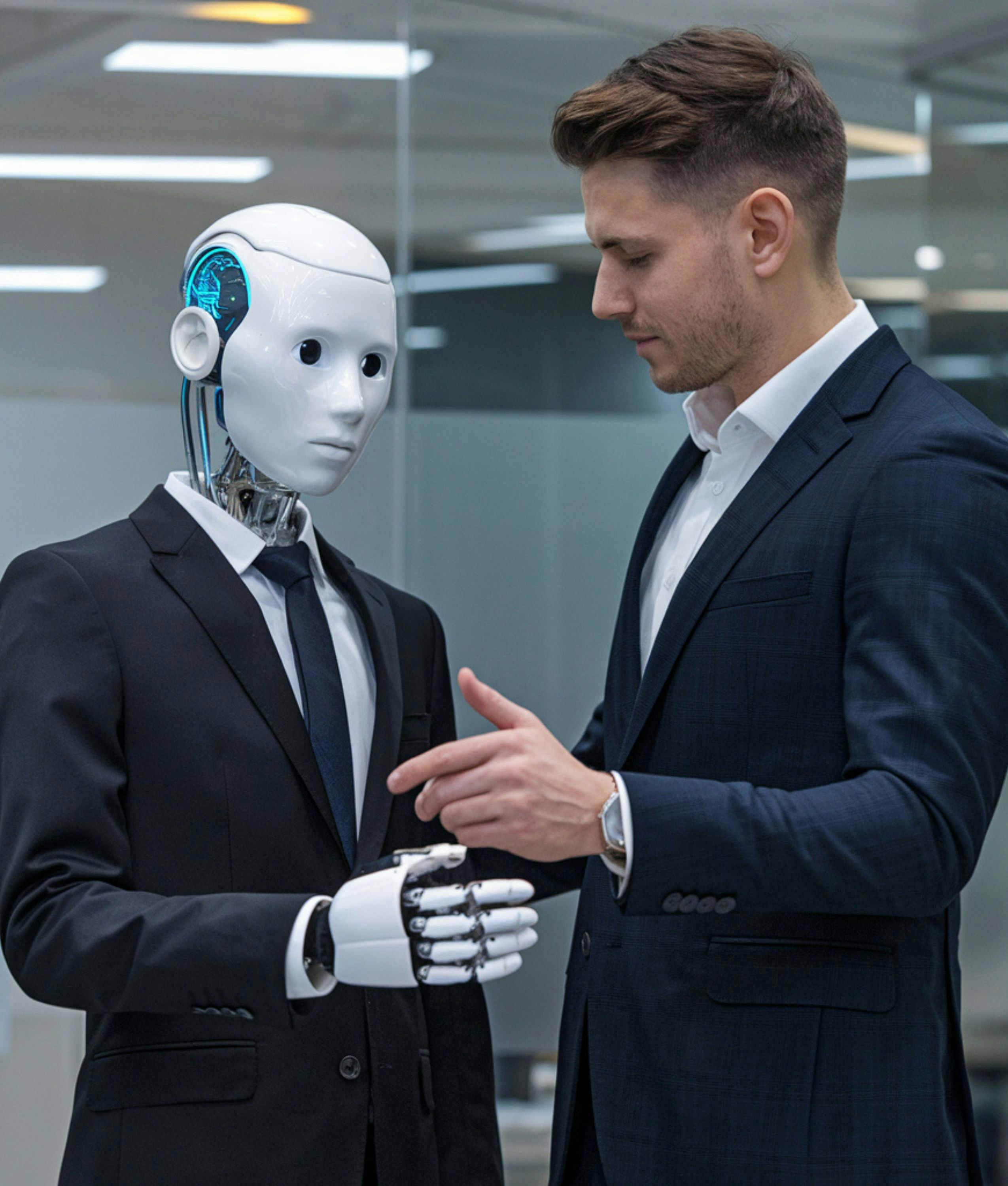
The rise of generative AI and data-driven tools has sparked debate about whether machines can replace human researchers. AI excels at crunching massive datasets and spotting patterns quickly, but experts emphasize that market research involves much more than data processing. As one industry analyst noted, “AI is only as good as the prompts we give it” and still requires human oversight to catch when it “gets weird”. In practice, AI has become a powerful accelerator – a “force multiplier” – in research workflows, not a mind reader. It can help ask better questions and sift through data at speed, but it cannot replace the emotional intelligence, context and creativity that humans bring to understanding consumers.
Market research at its core is about people, not just numbers. Experienced researchers know that “actionable insights demand more than data,” requiring interpretation, strategy and judgment. Relying solely on AI analysis, without human insight, risks producing “superficial, inaccurate answers”. Instead, the strategic advantage comes from blending human intelligence with AI’s firepower. In other words, AI can automate repetitive tasks and handle large-scale analytics, but it cannot intuitively explain why customers feel a certain way or predict how they will behave in the real world.
Emotional Intelligence and Empathy
A key limitation of AI is its lack of true emotional intelligence. Market research often relies on empathy and intuition to interpret consumer feelings and unspoken cues. Seasoned researchers “interpret data through a unique lens, bringing cultural context, emotions and real-world knowledge into the equation” – something today’s AI models simply cannot do. For example, AI-driven sentiment analysis may flag a spike in positive keywords, but without human context it misses underlying reasons. As one analyst observed, AI might detect “a sudden spike in demand for a product,” but it could fail to realize the reason is a viral TikTok trend or a cultural event – insights only a human can provide.
Put bluntly: algorithms can count words and detect patterns, but they can’t feel or read between the lines. They miss sarcasm, irony and subtle emotion. In a classic case study, AI misinterpreted a customer’s sarcastic tweet about “budget-friendly” service as positive feedback. Only a human moderator would catch the tone and recognize the hidden dissatisfaction. Similarly, when Pepsi launched its “Live For Now” campaign in 2017, AI-powered analysis touted activism themes as a winning idea – but missed the wave of genuine anger and cultural sensitivity in online conversations. By the time professional researchers noticed the problem, millions were wasted on a marketing misstep that a nuanced human insight could have prevented.
Unlike machines, human interviewers and moderators can pick up on body language, tone of voice, hesitation or confusion during conversations. They adapt on the fly, probing new angles or emotional cues as they emerge. As one research firm summarizes, a human interviewer “can adjust questions on the fly to probe emerging themes and recognize hesitation, enthusiasm, or tension – critical signals that AI cannot reliably detect”. In contrast, AI-driven surveys lack empathy: they cannot console an anxious respondent, follow up on a tear, or share a laugh when a joke is cracked. These human interactions often unlock the “insight hiding beneath the surface” – for example, discovering that an aging customer isn’t just buying anti-wrinkle cream to look younger, but because she wants to “feel alive” and confident in social settings. Pure data alone would never reveal that nuance.
Intuition, Creativity, and Context
Beyond empathy, human researchers contribute deep domain expertise and intuition. They understand business context, brand strategy, and real-world complexities that models lack. For instance, B2B markets often involve niche technical details and long sales cycles; generic AI models trained on broad consumer data may “lack the sector-specific understanding” needed to analyze these markets. Human specialists, by contrast, have years of experience with industry jargon, regulations and purchasing processes that AI simply hasn’t seen.
Humans also shine at creative synthesis. They connect disparate clues and form hypotheses in ways AI cannot. An analyst might listen to customer anecdotes across different interviews and suddenly see a common thread; an algorithm would only tally isolated data points. As one market strategist puts it, “connecting seemingly unrelated data points into innovative strategy requires cognitive flexibility and creativity beyond AI’s capabilities”. These strategic leaps – knowing to recommend a product pivot, or reframing a message for cultural fit – depend on human insight. AI can alert us to a trend, but it is human creativity that asks, “Now how might we capitalize on this in a way that resonates emotionally?”
In short, human researchers provide the intuition and context around data. They know which questions to ask (and which to avoid) so that research focuses on meaningful insights. As Jacqueline Drew of Tenato Strategy notes, expert researchers “take time to understand the way your business works,” write questions to meet real objectives, recruit genuine decision-makers, and conduct interviews that yield honest answers. They don’t just feed questions to an AI tool; they carefully design studies (surveys, focus groups, ethnographies) with a purpose, and then interpret results with a critical eye. Unchecked, AI can amplify hidden biases or even hallucinate answers. Human judges are needed to validate the findings – for example, recognizing when an AI model has spun a plausible-sounding statistic out of thin air.
- Emotional nuance: Humans read between the lines (tone, sarcasm, body language) in ways AI cannot. AI might score a comment “positive,” but a person can catch the resentment behind it.
- Adaptability: Skilled researchers pivot instantly during interviews, following leads and asking follow-ups. They notice an “awkward pause” or a hesitant tone – cues that algorithms simply miss.
- Business and cultural context: Humans bring real-world knowledge about a brand, industry, and culture that AI often lacks. They understand local trends, regulatory nuances, and customer communities that lie outside an AI’s training data.
- Creative synthesis: Human insight ties together clues from qualitative and quantitative data, forming big-picture strategies. This cognitive flexibility (“connecting seemingly unrelated data points”) is beyond what AI can do.
Real-World Cases: When AI Falls Short
Several case studies illustrate why a human-led approach wins out. In the tech startup world, Artifact was a “TikTok for news” app built by Instagram’s founders. The team relied heavily on AI analytics and synthetic audience modeling to predict appeal. But the AI overestimated demand and misunderstood core user needs; after numerous pivots, the company shut down in early 2024. In other words, automated segmentation and digital twins gave the wrong answers because they lacked real human perspective on what readers wanted.
In another example, a marketing team saved $40K by using AI tools in-house to field a customer survey. Six months later, they realized their questionnaire was deeply flawed, generating “false positive feedback” that led to $200K in bad product decisions. They had fallen into the trap of asking too-simple questions – things like “Are customers satisfied with our product?” – instead of probing for real emotional drivers. Professional researchers point out that AI is “practically blind to cultural context”. It cannot craft the rich, scenario-based questions a trained human would know to use, nor can it interpret a humorous or offhand answer in context.
By contrast, there are countless successes from human-guided projects. One team studying wellness discovered that many women were anxious about aging, not because they “feared aging” per se, but because they wanted to feel more alive in every moment. They learned this by talking directly and empathetically with women, rather than relying only on numeric polls. These conversations revealed “a lot of emotional baggage and cultural context” that purely quantitative data could not provide. The brand was then able to shift its messaging accordingly – a breakthrough that an AI summary of data alone would never have uncovered.
Another major misstep avoided human researchers was the Pepsi “Kendall Jenner” ad in 2017. Pepsi had used AI sentiment tools to validate its campaign around social justice imagery. The AI told them “activism” would resonate with youth, but it failed to detect the tone-deaf irony and frustration brewing online. The result was a $5+ million flop and a PR crisis that professional focus groups would have spotted immediately. In short, experienced human insight would have caught the “cultural minefield” that AI missed.
AI as a Tool, Not a Replacement
Industry experts are clear: AI should be treated as an assistant in market research – not a replacement for human expertise. The promise of AI lies in automating tedious grunt work, freeing up analysts to do the thinking that adds value. For example, AI can transcribe hours of interviews, tag recurring themes, crunch survey data, and even generate preliminary charts. These efficiencies allow researchers to allocate more time to interpreting results, crafting strategy, and exploring the “why” behind the numbers.
But crucially, humans must stay “in the loop” every step of the way. One seasoned insights manager explains that AI tools (like digital summaries) are great for initial direction, yet they “do not understand the intricacies of the context behind [responses]”. In practice, the best teams use AI to cover 50–70% of the groundwork (data collection, initial coding, pattern-spotting), and then have humans verify, enrich, and refine the findings. In other words, AI might deliver a first draft of an insight or segmentation, but a human expert will build on it to produce a recommendation that is reliable and nuanced.
Market researchers also emphasize the need to validate AI outputs. Any AI-generated insight should be checked against real behavior or additional data. For instance, Ai Sultana Iqbal notes that relying on synthetic survey responses is risky: “synthetic research respondents do not buy your products, so cannot reliably inform your business decisions”. Similarly, generative AI can suffer from “hallucinations,” inventing facts or quotes that sound plausible but are false. That is why human judgment is essential to filter out these errors.
In many agencies’ workflows today, AI is used to speed up routine tasks: sorting open-ended text into themes, generating statistical summaries, or even drafting a survey questionnaire. Jacquelyn Drew of Nature’s Way admits, “I use [AI] every day … for emails because that’s stuff that does not really add value, but it takes up a lot of time”. But when it comes to the core research – crafting the right questions, connecting with real customers, and interpreting results – she insists “technology alone is not enough”. The human team decides what to explore next and what insights truly matter, guided by empathy and experience.
The lesson across the board is clear: AI augments, but it does not replace, human-led research. As one market research veteran puts it, “These tools aren’t magic. They’re there to help humans ask better questions — and interpret better answers”. This philosophy is echoed in best-practice playbooks: use AI for data processing and pattern detection, while reserving interpretation, bias-checking, and strategy for people. In practice, blending AI and human expertise yields the best outcomes. Companies that “blend human intelligence with AI’s innovation” are positioned for a sustained advantage, whereas those that rely only on automated answers often miss the real story.
The Continuing Human Edge
In the end, market research is about the human story. Data points may tell you what is happening; human researchers discover why it’s happening. As Madeline McDonald of Nature’s Way puts it, the goal is to really understand “people’s social, emotional, and functional needs” – questions that transcend what price points or demographics alone can answer. AI cannot replicate the human drive to listen, empathize, and build narratives from raw information. It cannot sit in strategy meetings, challenge assumptions, or infuse consumer insights with creativity.
Indeed, industry thought leaders predict that the most successful research teams of the future will be human-led, AI-enhanced. Across recent conferences and reports, the refrain is: use AI as a “thought partner” to free analysts for big ideas and creative problem-solving. Let algorithms handle the repetitive analysis, but keep people in charge of asking the core questions – the ones inspired by intuition and empathy. “Empathy is the shortcut to the trend cycle,” McDonald reminds us: by focusing on underlying human motivations instead of just chasing the latest buzz, researchers stay ahead of changes.
For now, AI’s “intelligence” ends where human judgment begins. Businesses that understand this will succeed: trusting AI to assist, but relying on humans for insight. As one summary of the current era concludes, “AI is a force multiplier — not a mind reader… it still takes human intuition, creativity, and rigor to turn data into real insight”. The future of market research isn’t either/or. It’s man + machine, together at their best.
Sources: Industry reports and expert interviews on AI in market research. Each citation corresponds to research on AI’s limits and the enduring importance of human insight.